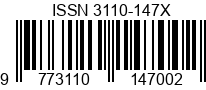
From Algorithms to Understanding: The Role of Computational Thinking in Physics Education
Keywords:
bibliometric analysis, computational thinking, physics education, SLRAbstract
This study investigates the integration of Computational Thinking (CT) in physics education over the past two decades (2003–2024) using a Systematic Literature Review (SLR) and bibliometric analysis. A total of 42 peer-reviewed articles from Scopus and PubMed databases were analyzed to identify trends, thematic developments, and geographic contributions. The findings reveal a significant growth in CT-related research after 2015, driven by global STEM education initiatives and advancements in digital tools. Notable contributions emerged from North America, Europe, and Asia, with three primary research themes: CT-based instructional methods and their impact on student outcomes, the role of computational tools and simulations in enhancing conceptual understanding, and frameworks for assessing CT competencies in physics curricula. While the findings highlight the transformative potential of CT in fostering problem-solving skills and bridging theoretical and practical learning, critical research gaps remain. These include the absence of standardized assessment methods, limited studies in underrepresented regions, and insufficient exploration of implementation strategies and teacher training. Addressing these gaps is essential to ensure equitable and effective CT integration across diverse educational contexts. This study underscores the interdisciplinary value of CT in preparing students for technology-driven challenges and provides actionable insights for researchers, educators, and policymakers to advance its application in physics education. By bridging theory and practice, CT can play a pivotal role in shaping future-ready learners equipped with critical, analytical, and computational skills.
References
Angeli, C., & Giannakos, M. (2020). Computational Thinking Education: Issues and Challenges. In Computers in human behavior (Vol. 105, hal. 106185). Elsevier. https://doi.org/10.1016/j.chb.2019.106185
Angraini, L. M., Susilawati, A., Noto, M. S., Wahyuni, R., & Andria, D. (2024). Augmented reality for cultivating computational thinking skills in mathematics completed with literature review, bibliometrics, and experiments to students. Indonesian Journal of Science & Technology, 9(01).
Carabregu-Vokshi, M., Ogruk-Maz, G., Yildirim, S., Dedaj, B., & Zeqiri, A. (2024). 21st century digital skills of higher education students during Covid-19—is it possible to enhance digital skills of higher education students through E-Learning? Education and Information Technologies, 29(1), 103–137.
Chen, J., Liu, Z., Huang, X., Wu, C., Liu, Q., Jiang, G., Pu, Y., Lei, Y., Chen, X., & Wang, X. (2024). When large language models meet personalization: Perspectives of challenges and opportunities. World Wide Web, 27(4), 42.
Dai, S., Duan, X., & Zhang, W. (2020). Knowledge map of environmental crisis management based on keywords network and co-word analysis, 2005–2018. Journal of Cleaner Production, 262, 121168.
Denning, P. J., & Tedre, M. (2021). Computational thinking: A disciplinary perspective. Informatics in Education, 20(3), 361.
Gale, A. P., Chapman, J. O., White, D. E., Ahluwalia, P., Williamson, A. K. J., Peacock, K. R., Akagbosu, R., Lepine, T. M., Arizor, I., & Bone, L. A. (2022). On embracing the concept of becoming environmental problem solvers: the trainee perspective on key elements of success, essential skills, and mindset. Environmental Reviews, 30(1), 1–9.
Hermans, S., Neutens, T., Wyffels, F., & Van Petegem, P. (2024). Empowering Vocational Students: A Research-Based Framework for Computational Thinking Integration. Education Sciences, 14(2), 206.
Hunsaker, E. (2020). Computational thinking. The K-12 educational technology handbook, 130–156.
Lucey, C. R., Hauer, K. E., Boatright, D., & Fernandez, A. (2020). Medical education’s wicked problem: Achieving equity in assessment for medical learners. Academic Medicine, 95(12S), S98–S108.
Marzi, G., Balzano, M., Caputo, A., & Pellegrini, M. M. (2024). Guidelines for Bibliometric‐Systematic Literature Reviews: 10 steps to combine analysis, synthesis and theory development. International Journal of Management Reviews.
Ojajuni, O. P. (2023). Exploring the Impact of Immersive Technology on Engineering Students’ Computational Thinking (CT) Skills. Southern University and Agricultural and Mechanical College.
Page, M. J., Moher, D., Bossuyt, P. M., Boutron, I., Hoffmann, T. C., Mulrow, C. D., Shamseer, L., Tetzlaff, J. M., Akl, E. A., & Brennan, S. E. (2021). PRISMA 2020 explanation and elaboration: updated guidance and exemplars for reporting systematic reviews. bmj, 372.
Palts, T., & Pedaste, M. (2020). A model for developing computational thinking skills. Informatics in Education, 19(1), 113–128.
Paul, J., Lim, W. M., O’Cass, A., Hao, A. W., & Bresciani, S. (2021). Scientific procedures and rationales for systematic literature reviews (SPAR‐4‐SLR). International Journal of Consumer Studies, 45(4), O1–O16.
Pérez, A. (2018). A framework for computational thinking dispositions in mathematics education. Journal for Research in Mathematics Education, 49(4), 424–461.
Rahimi, R. A., & Oh, G. S. (2024). Rethinking the role of educators in the 21st century: navigating globalization, technology, and pandemics. Journal of Marketing Analytics, 1–16.
Roco, M. C. (2020). Principles of convergence in nature and society and their application: from nanoscale, digits, and logic steps to global progress. Journal of Nanoparticle Research, 22(11), 321.
Saad, A., & Zainudin, S. (2024). A review of teaching and learning approach in implementing Project-Based Learning (PBL) with Computational Thinking (CT). Interactive Learning Environments, 1–25.
Tschisgale, P., Wulff, P., & Kubsch, M. (2023). Integrating artificial intelligence-based methods into qualitative research in physics education research: A case for computational grounded theory. Physical Review Physics Education Research, 19(2), 20123.
Wang, H., Fu, T., Du, Y., Gao, W., Huang, K., Liu, Z., Chandak, P., Liu, S., Van Katwyk, P., & Deac, A. (2023). Scientific discovery in the age of artificial intelligence. Nature, 620(7972), 47–60.
Ye, H., Liang, B., Ng, O.-L., & Chai, C. S. (2023). Integration of computational thinking in K-12 mathematics education: A systematic review on CT-based mathematics instruction and student learning. International Journal of STEM Education, 10(1), 3.
Downloads
Published
Issue
Section
License
Copyright (c) 2025 Journal of Educational Innovation and Technology

This work is licensed under a Creative Commons Attribution 4.0 International License.